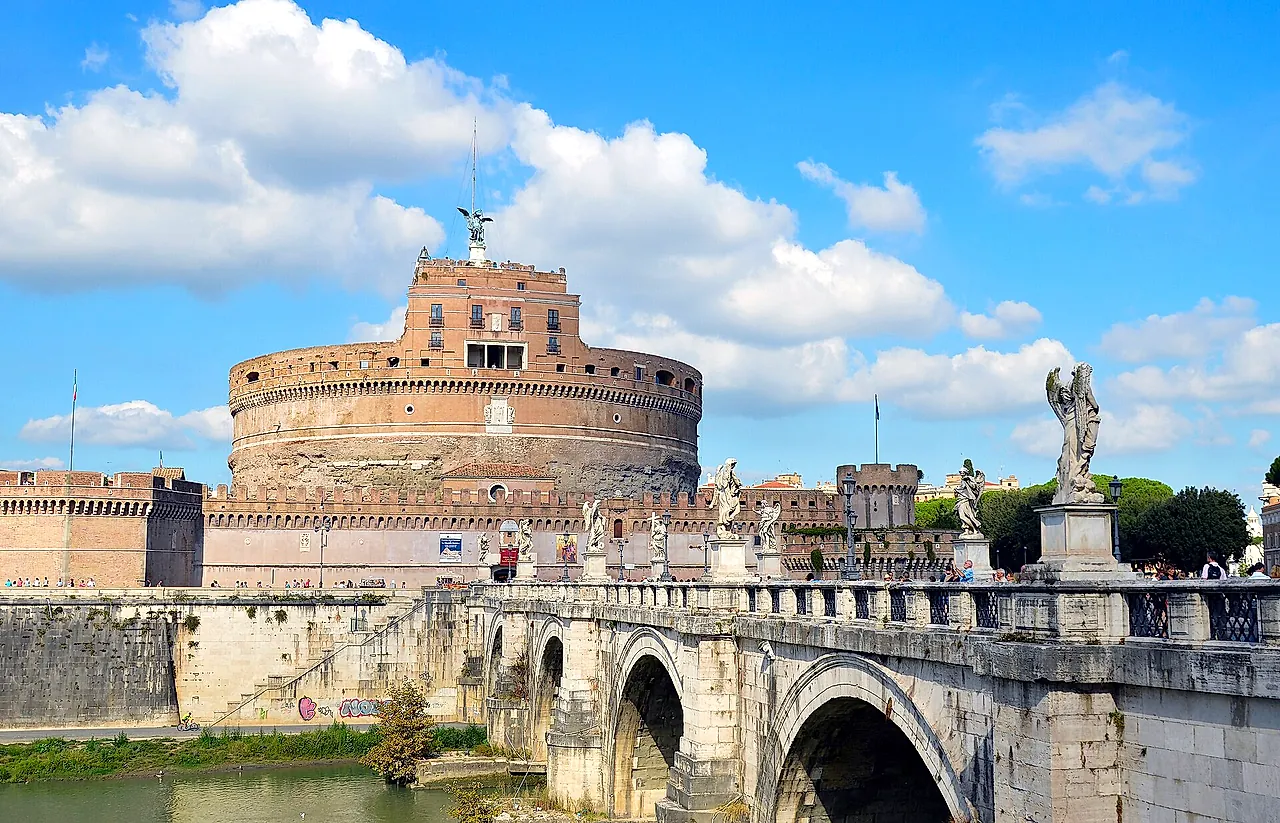
Rome · Lungotevere Castello 50 · at the end of the Ponte Sant'Angelo
Castel Sant'Angelo: tickets, hours and what to see
Hadrian's mausoleum, later a papal fortress, prison and museum. Official prices, hours, free days and the rules to know before you go.
Today
Opening hours for every month are on the Opening hours page.
Checked against the official website on 24 October 2026 · Official source
In short
- Castel Sant'Angelo is open Tuesday to Sunday from 9:00 to 19:30, with the last entry at 18:30. It is closed on Mondays, on 25 December and on 1 January, except for extraordinary openings. On 2 November and 7 December 2026 it also opens on a Monday, from 14:00 to 20:00. Hours read on the museum's pages on 24 October 2026.
- Official price: the full ticket is 18 € since 1 July 2026, and 2 € for EU citizens aged 18 to 25. Under-18s and other cases set by law enter free, and so does everyone on the first Sunday of the month, without online booking. We call 18 € the base price: the museum changes prices on some event days.
- Official tickets bought online are in your name. You must show the ticket and an original ID document at the entrance, and if the details do not match the document you are refused entry with no refund. One change of name is allowed, by midnight of the day before.
- The tickets and tours on this site are sold by our partner Tiqets, a third party, which sets its own prices: entry with an audio guide app is listed at 22 € at the time of writing. According to the Tiqets page, that ticket is not refundable or changeable and the entry time may shift by up to 45 minutes. Read the card before you pay.
- There is no cloakroom and animals are not allowed. The ticket office is in a temporary structure outside the castle while works go on, and the route through the ground-floor ambulatory may be diverted. The Passetto di Borgo can be visited only on separate guided tours.
From emperor's tomb to papal fortress
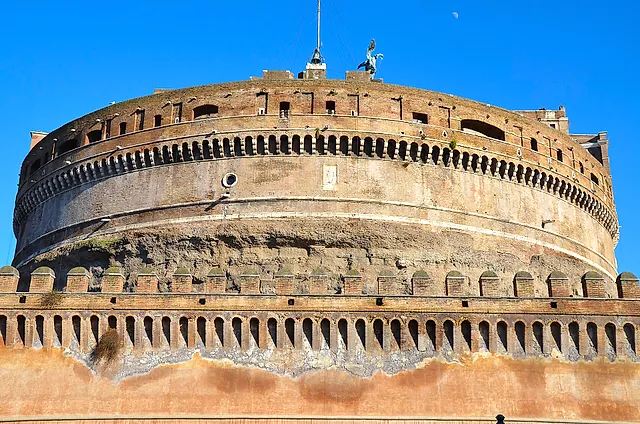
In the 130s AD the emperor Hadrian had a tomb built on the right bank of the Tiber for himself and his successors. It was completed in 139 under Antoninus Pius, and the emperors up to Caracalla (217) were buried there. In the 5th century, on a date the sources do not agree on, it became a fortress guarding the bridge and the city.
The name comes from a tradition: in 590 Pope Gregory the Great, leading a procession against a plague, is said to have seen the Archangel Michael sheathing his sword above the monument. For the full story, read the history of the castle.
The Roman ramps
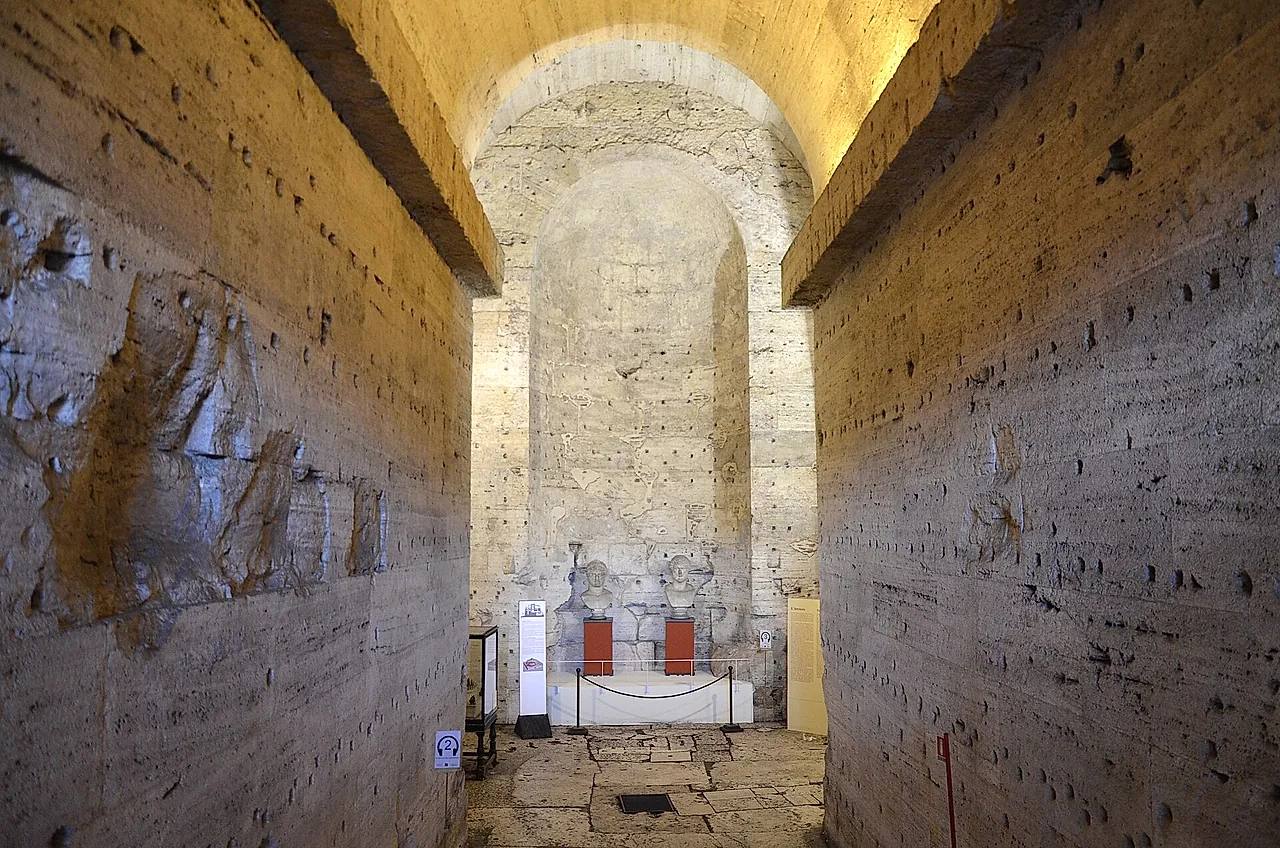
The museum says you can start the visit from the Dromos, in front of the entrance, and go on up the ramp to the Cortile dell'Angelo. It warns that since 3 December 2024 the circular route through the ambulatory of the ground floor may be diverted, because of works to improve accessibility. John Murray's 1867 handbook (p. 72) says the spiral corridor of the mausoleum was brought to light by excavations begun around 1825.
Courtyards and the armoury
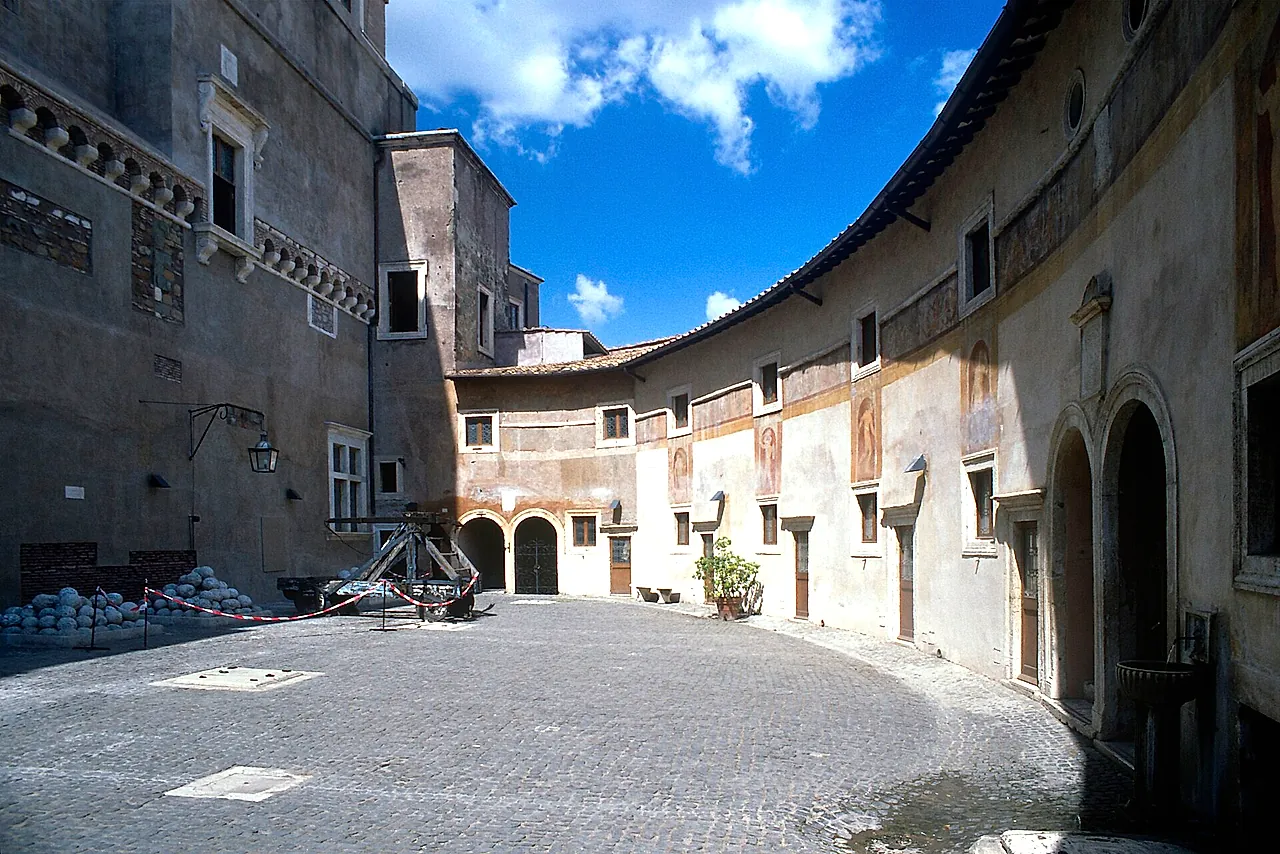
Two courtyards open inside the walls: the Cortile dell'Angelo, where the earlier marble angel by Raffaello da Montelupo stands according to Baedeker's 1909 handbook (p. 359), and the curved Cortile di Alessandro VI. Since 20 June 2026 the rooms of the former armoury have housed “Panopliæ”, an exhibition of the museum's historic weapons in six rooms.
Papal apartments and the Sala Paolina
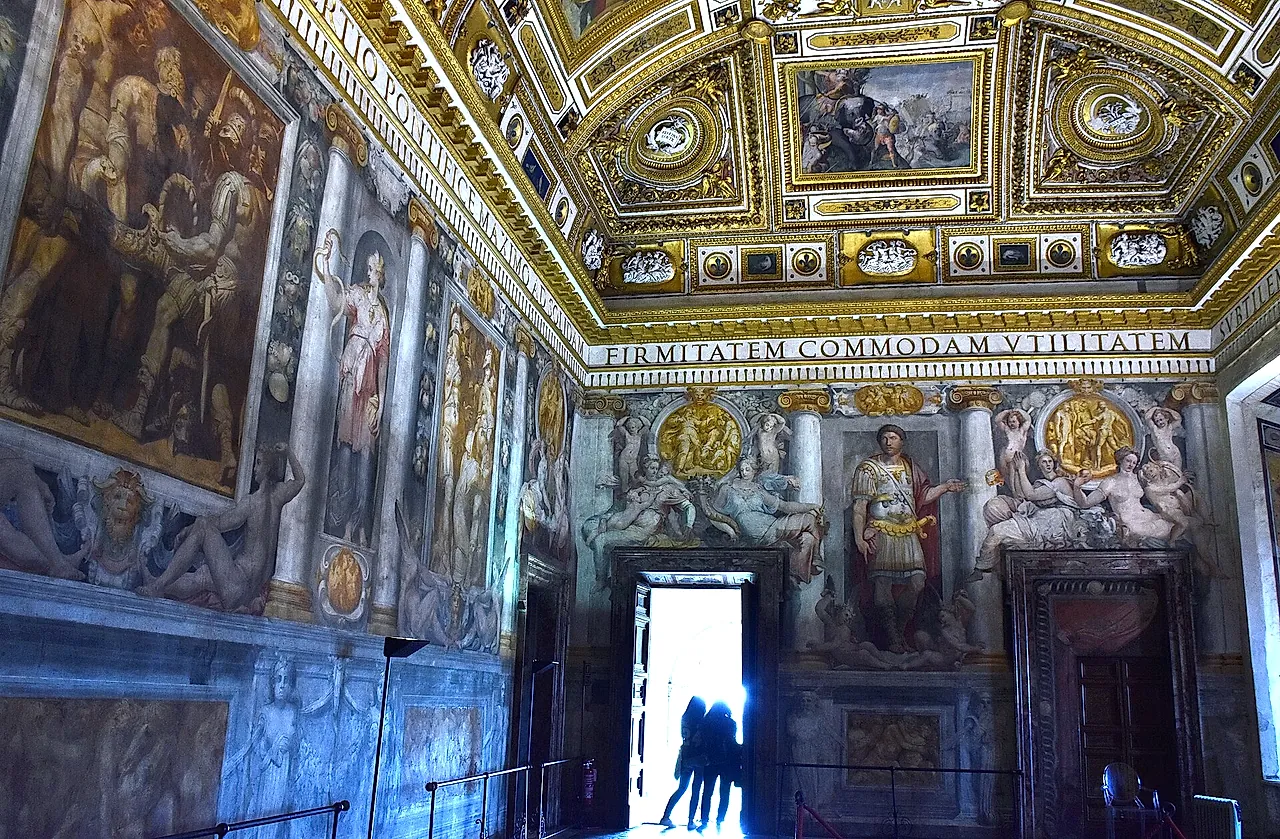
The upper floors hold the apartment that Pope Paul III Farnese had decorated in the 1540s. The Sale Farnesiane reopened on 20 June 2026: the Sala di Amore e Psiche, the Sala del Perseo, the Sala Paolina, the Sala dell'Adrianeo and the Sala dei Festoni, according to the museum. Baedeker (1909, p. 359) gives the frescoes of the Sala Paolina to Perin del Vaga.
The Appartamento del Castellano, built in 1730-31, has been open to the public since 11 December 2024.
The angel on top and the terrace
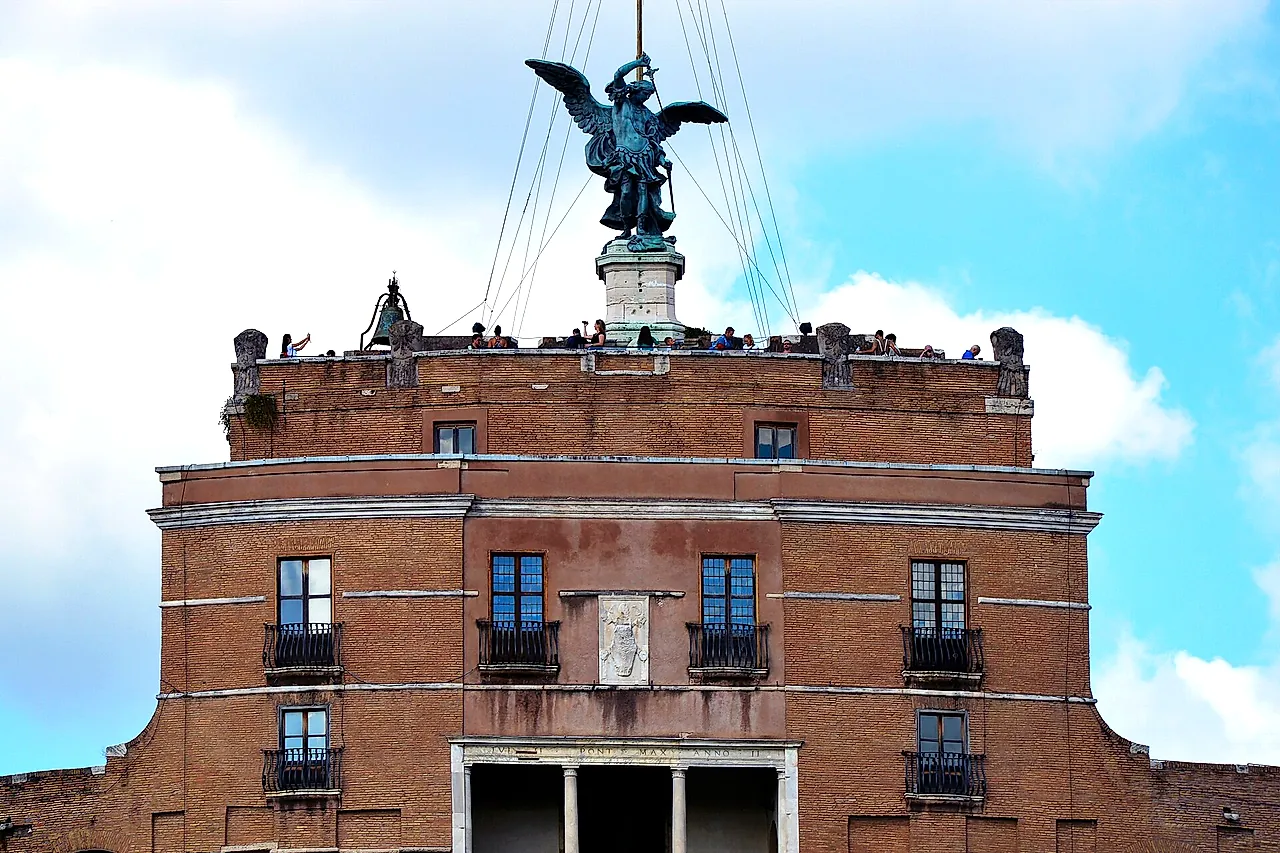
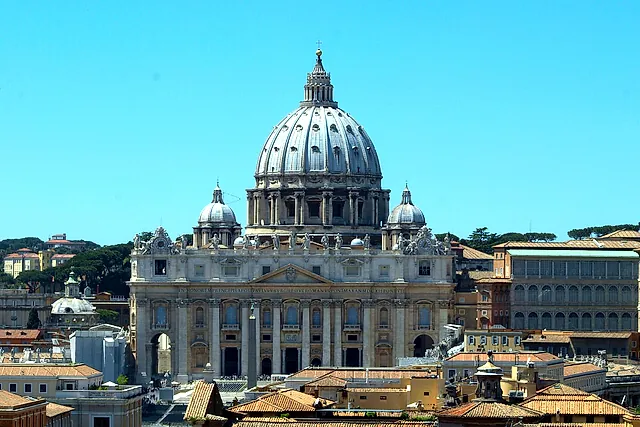
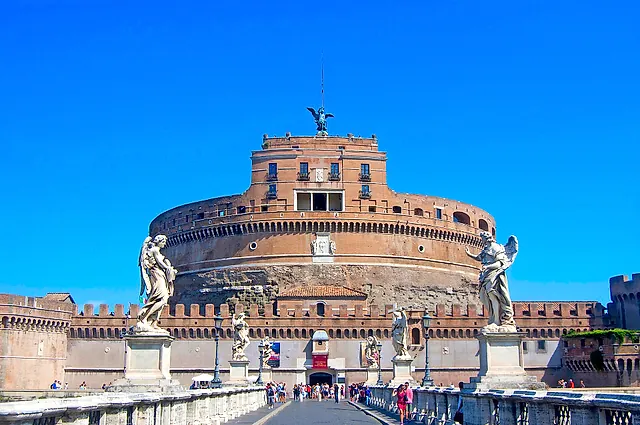
The bronze Archangel Michael on the summit is by Peter Anton von Verschaffelt, commissioned for the Jubilee of 1750, according to the museum; the sources give 1752 or 1753 for its placing. The museum's website shows a “Terrazza dell'Angelo” among its photos but does not say whether or when it is open, so do not count on it. Baedeker (1909, p. 359) praised the view of St. Peter's from the platform.
The Passetto di Borgo
The Passetto is the raised, fortified corridor that links the Vatican to the castle along the old walls, meant for the popes' escape. The sources disagree on when it was built: the museum's site speaks of 1277, while the English guidebooks of Murray (1867) and Hare (1902) say 1410-11. In 1527 Pope Clement VII used it during the Sack of Rome.
Today it opens only on guided tours sold apart from the ticket: Friday to Sunday from 9:00 to 13:00 (with entry to the castle included, except on the first Sunday of the month), on Saturday evening from 19:00 to 23:00, and on easier-access visits on the second and fourth Sunday. Prices and length are not confirmed by the official pages we could read.
Ponte Sant'Angelo and Bernini's angels
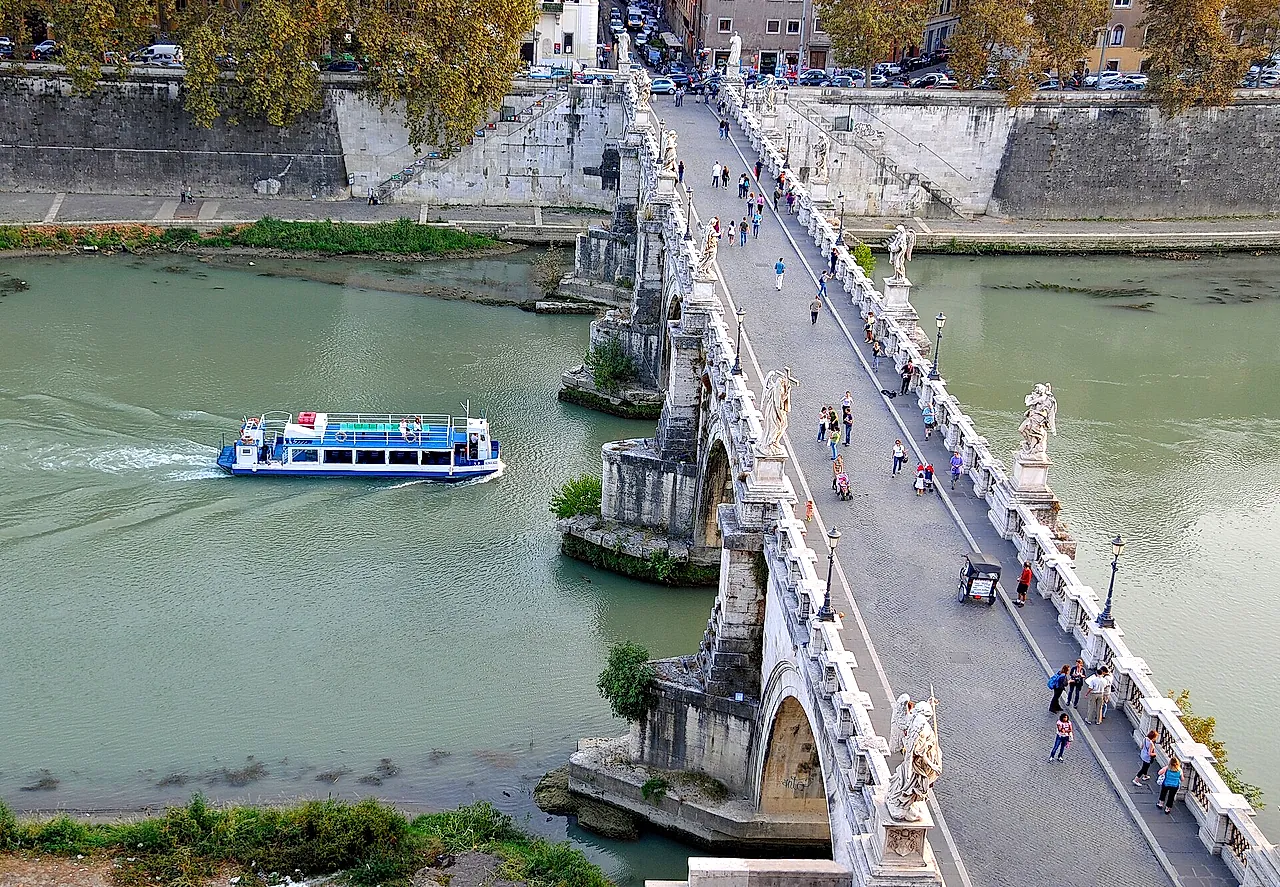
The bridge began as Hadrian's Pons Aelius, built to reach the tomb, and only its three central arches are ancient, according to Baedeker (1909, p. 356). The ten marble angels were placed in the late 1660s under Clement IX on a design by Bernini. English Wikipedia and Hare (1902, p. 159) say Bernini himself carved only two of them, now in Sant'Andrea delle Fratte. The bridge is not part of the ticket. In a straight line it is about 130 m from the castle.
Visitor guide
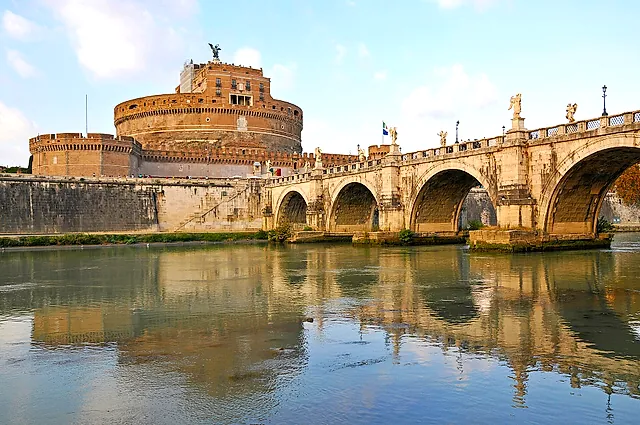
Castel Sant'Angelo Tickets: Prices, Free Days, Name on the Ticket
Castel Sant'Angelo tickets: official price 18 euros, 2 euros for EU citizens aged 18-25, free first Sunday, ID rule, Monday openings, the Passetto.
What to See at Castel Sant'Angelo: Ramps, Courtyards, Papal Rooms
What to see at Castel Sant'Angelo in Rome: Roman ramps, courtyards, Sale Farnesiane, the Castellano's apartment, the Passetto, Bernini's angels.
Castel Sant'Angelo Visit Tips: ID, Free Sundays, Getting There
Tips for Castel Sant'Angelo in Rome: original ID, no cloakroom, works and the temporary ticket office, Monday openings, free Sundays, how to get there.
History of Castel Sant'Angelo: From Hadrian's Tomb to Museum
How Castel Sant'Angelo came about: Hadrian's mausoleum, the fortress and the legend of the Angel, the Passetto, the papal prison and the museum of 1925.